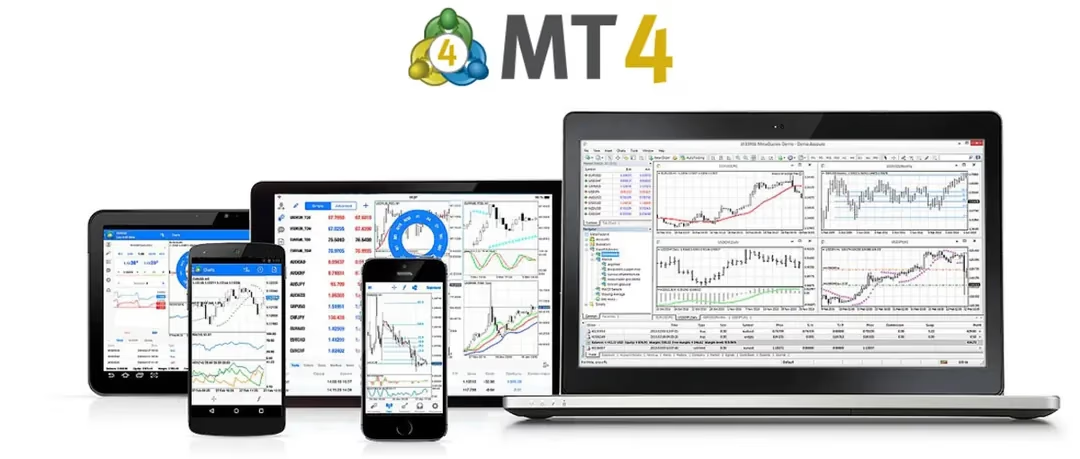
What keeps MT4 relevant after two decades
MetaQuotes stopped issuing new MT4 licences some time ago, steering brokers toward MT5. Yet most retail forex traders kept using MT4. The reason is straightforward: MT4 has twenty years of muscle memory behind it. Thousands of custom indicators, Expert Advisors, and community scripts run on MT4. Switching to MT5 means rebuilding that entire library, and most traders can't justify the effort.
After testing MT4 and MT5 side by side, and the gap is marginal for most strategies. MT5 has a few extras including more timeframes and a built-in economic calendar, but chart functionality is nearly identical. For most retail strategies, MT4 still holds its own.
Getting MT4 configured properly the first time
The install process is quick. The part that trips people up is getting everything configured correctly. By default, MT4 shows four charts squeezed onto the screen. Close all of them and open just the instruments you actually trade.
Templates are worth setting up early. Configure your go-to indicators once, then right-click and save as template. Then you can apply it to any new chart instantly. Small thing, but over time it adds up.
Something most people miss: go to Tools > Options > Charts and enable "Show ask line." The default view is the bid price by default, which can make buy entries seem misaligned until you realise the ask price is hidden.
MT4 strategy tester: honest expectations
The strategy tester in MT4 gives you the ability to run Expert Advisors against historical data. That said: the quality of those results comes down to your tick data. Standard history data from MetaQuotes is modelled, meaning it fills in missing ticks using algorithms. If you're testing something more precise than a quick look, download real tick data from a provider like Dukascopy.
Modelling quality tells you more than the bottom-line PnL. Below 90% indicates the results shouldn't be taken seriously. Traders sometimes show off backtests with 25% modelling quality and can't figure out why their live results don't match.
Backtesting is where MT4 earns its reputation, but the output is only useful with quality tick data.
MT4 indicators beyond the defaults
MT4 comes with 30 standard technical indicators. Most traders never touch them all. But the real depth comes from custom indicators built with MQL4. The MQL5 marketplace alone has over 2,000 options, ranging from simple moving average variations to full trading dashboards.
The install process is painless: place the .ex4 or .mq4 file into the MQL4/Indicators folder, restart MT4, and it appears in the Navigator panel. The risk is reliability. Community indicators vary wildly. Some are solid tools. Some haven't been updated since 2015 and may crash your terminal.
When adding third-party indicators, check when it was last updated and whether people in the forums mention bugs. Bad code won't just give wrong signals — it can freeze MT4.
Risk management settings most MT4 traders ignore
There are several built-in risk management tools that the majority of users don't bother with. The most useful is the maximum deviation setting in the trade execution window. This controls the amount of slippage is acceptable on market orders. Leave it at zero and the broker can fill you at whatever price the broker gives you.
Everyone knows about stop losses, but the trailing stop function is worth exploring. Click on an open trade, choose Trailing Stop, and enter the pip amount. It moves with price moves your way. Doesn't work well in choppy markets, but for trend-following it reduces the need to micromanage the trade.
These settings take a minute to configure and the difference in discipline is noticeable over time.
Expert Advisors — before you trust a robot with your money
EAs have obvious appeal: set rules, let the code trade, walk away. In reality, the majority of Expert Advisors underperform over any decent time period. The ones marketed using flawless equity curves are often fitted to past data — they look great on historical data and break down when conditions shift.
None of this means all EAs are useless. Some traders code custom EAs for specific, narrow tasks: opening trades at session opens, automating position size calculations, or exiting positions at fixed levels. These utility-type EAs are more reliable learn more here because they do defined operations without needing interpretation.
Before running any EA with real money, use a demo account for at least a few months. Forward testing tells you more than backtesting alone.
Using MT4 outside Windows
MT4 is a Windows application at heart. Mac users deal with compromises. The old method was emulation, which mostly worked but introduced display glitches and the odd crash. A few brokers now offer macOS versions built on Crossover or similar wrappers, which is an improvement but remain wrappers at the end of the day.
MT4 mobile, on both Apple and Android devices, are genuinely useful for watching your account and tweaking stops. Full analysis on a phone screen is pushing it, but closing a trade from your phone has saved plenty of traders.
Check whether your broker offers real Mac support or a compatibility layer — the difference in stability is noticeable.